The late afternoon sun casts a warm, honeyed glow across the teak deck. The twin masts of the phinisi schooner cut a sharp silhouette against a sky streaked with crimson and gold. To the west, the volcanic peak of Mount Agung on Bali is a distant, brooding shadow. The only sounds are the gentle creak of timber, the whisper of the wind in the rigging, and the rhythmic lap of the Indian Ocean against the ironwood hull. This is the promise of a private cruise in the Indonesian archipelago. Yet, this serene picture is entirely dependent on one critical factor: timing. Selecting the right month to charter your vessel is the single most important decision you will make, distinguishing a placid sail from a challenging passage. See also: explore Private Vs Sharing Phinisi.
When to Charter Your Phinisi Bali: A Guide to the Dry Season and Calmest Seas
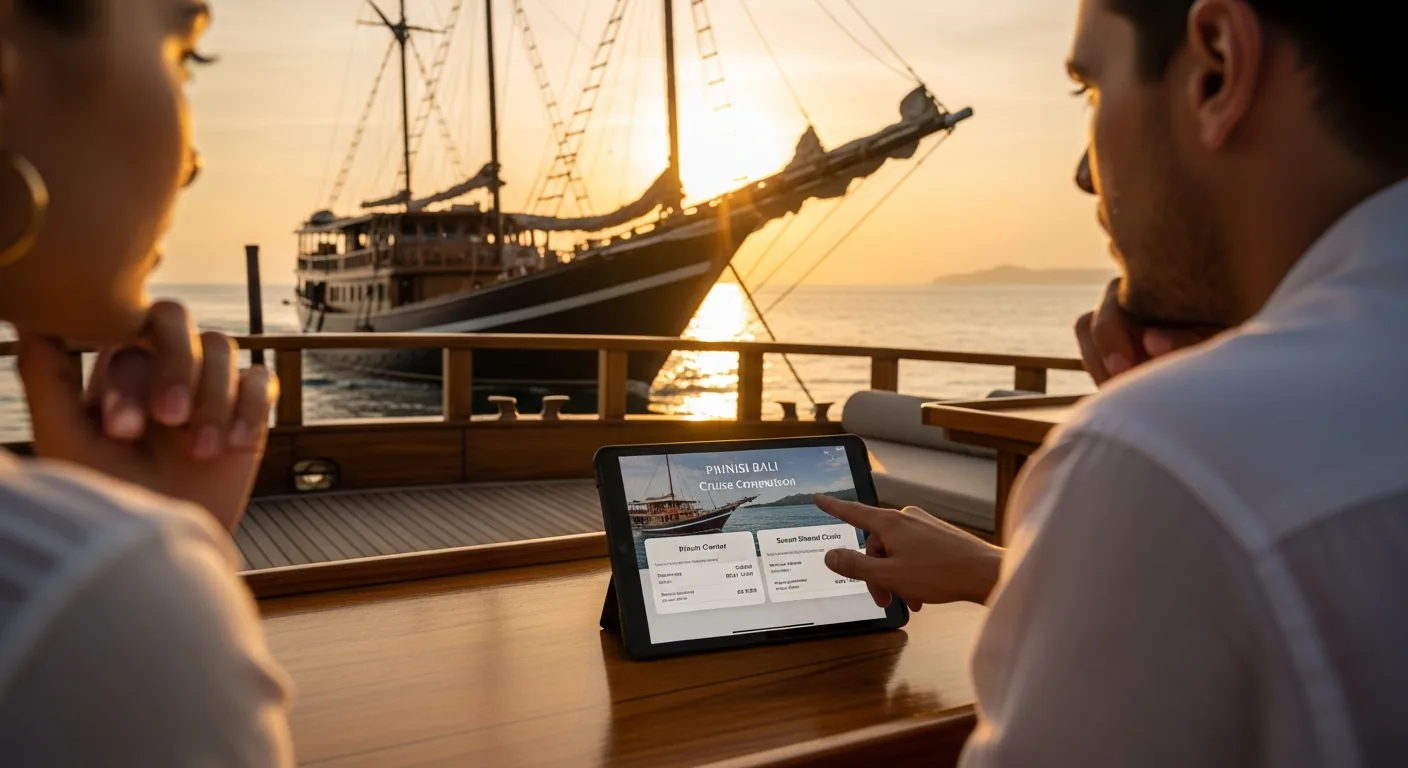
The allure of a traditional phinisi schooner is its deep connection to the sea. These hand-built vessels, a legacy of the Bugis seafarers of South Sulawesi, are designed to move with the elements. Understanding Bali’s distinct maritime seasons is therefore not just a practical matter of comfort; it is essential to the quality of your experience. The primary consideration is the division between the dry season, running roughly from April to October, and the wet season, from November to March. This guide provides a detailed analysis to help you align your calendar with the optimal sailing conditions for your Phinisi Bali charter from Benoa Harbor. See also: explore Contact.
The Core Question: Aligning Your Calendar with Bali’s Maritime Climate
Bali’s weather is governed by two opposing monsoons. From approximately April through October, the southeast monsoon brings dry air from the Australian continent, resulting in lower humidity, abundant sunshine, and consistently pleasant weather. These are the months that define the high season for any maritime activity, including a private phinisi cruise bali. The winds during this period, known as the trade winds, are generally predictable, blowing from the southeast at a moderate 10 to 15 knots. This creates ideal sailing conditions, particularly for voyages across the Badung Strait towards the Nusa Islands. See also: Phinisi Bali.
Conversely, from November to March, the northwest monsoon prevails, carrying moisture-laden air from Asia. This period is characterized by higher humidity, overcast skies, and intermittent, though sometimes heavy, rainfall. Sea conditions can be less predictable, with increased swell, particularly in the open waters of the Lombok Strait east of Nusa Penida. While sailing is still possible, itineraries require more flexibility. Understanding this fundamental climatic rhythm is the first step in planning a successful charter. See also: Phinisi Bali Home.
A Month-by-Month Analysis for Your Phinisi Cruise Bali
While the “dry season” provides a broad guideline, conditions vary subtly from month to month. Each period offers distinct advantages, whether you are planning a short bali phinisi sunset cruise or a multi-day expedition to explore the cliffs and coves of Nusa Penida.
- April – May (The Verdant Shoulder Season): As the last of the wet season rains subside, Bali’s landscapes are at their most lush and vibrant. These months represent a sweet spot for chartering a phinisi bali. The tourist crowds of peak season have not yet arrived, and the seas are typically calm as the southeasterly winds establish themselves. Water clarity is excellent, often exceeding 25 meters, making it a prime time for snorkeling and diving. Average water temperatures hover around a comfortable 28°C (82°F). Charter rates may be more favorable than in the subsequent peak months.
- June – August (The Peak Dry Season): This is the heart of the dry season and the most popular time for travel to Bali. You can expect day after day of clear blue skies and minimal rainfall. The consistent southeast trade winds provide a refreshing breeze and excellent sailing. This is the ideal period for longer expeditions to Nusa Penida and beyond, as sea conditions are at their most reliable. It’s also when cultural events like the Bali Arts Festival take place in Denpasar (typically mid-June to mid-July). Due to high demand, it is advisable to book charters for these months at least 6 to 9 months in advance.
- September – October (The Connoisseur’s Choice): For many seasoned sailors, this is the most desirable period. The weather remains dry and stable, but the peak season crowds of August have thinned. The ocean has been warmed by the long summer, with surface temperatures often reaching 29°C (84°F). Critically, this is the prime season for encountering specific marine life. The elusive Mola Mola (oceanic sunfish) is frequently sighted at dive spots like Crystal Bay off Nusa Penida from July through October. The winds begin to soften in October, leading to exceptionally placid sea conditions, perfect for families and those sensitive to motion.
Navigating the Wet Season: Is a Phinisi Schooner Bali Charter Feasible?
While the dry season is unequivocally the preferred time, a charter during the wet season (November – March) is not out of the question, provided expectations are managed and itineraries are flexible. The rain in Bali during this period is often not a constant drizzle; it typically arrives in intense, short-lived downpours, most frequently in the afternoon. These can be quite dramatic, and the cloud formations often produce spectacular sunsets.
The primary advantage is value. Charter rates for a private phinisi schooner bali can be 15-20% lower than in August. The island is also less crowded. However, the challenges are real. The northwest monsoon can create choppy conditions, particularly on the south-facing coasts. January is statistically the wettest month, receiving over 350mm of rain on average. According to Captain Adiwijaya, a veteran skipper with over 20 years of experience sailing these waters, “The wet season requires a more responsive approach. We constantly monitor the weather patterns. A plan to visit the southern cliffs of Nusa Penida might change to exploring the sheltered bays of Nusa Lembongan. The beauty is different—more dramatic, with moody skies—but it is there for those who are adaptable.”
Itinerary-Specific Timing: Benoa Sunset vs. Nusa Penida Expedition
The ideal timing for your charter also depends heavily on your intended itinerary. A four-hour sunset cruise has very different meteorological requirements than a three-day-two-night expedition. The choice between a brief coastal sail and an open-water passage is a critical factor in deciding when to book.
| Cruise Type | Ideal Months | Weather Sensitivity | Key Considerations |
|---|---|---|---|
| Bali Phinisi Sunset Cruise | Year-round, with a preference for April-October | Low | A 3-4 hour cruise from Benoa Harbor is less impacted by seasonal changes. Afternoon showers in the wet season often clear by the 4 PM departure time, leaving behind fresh air and dramatic clouds. |
| Bali Phinisi Day Cruise | April – October | Medium | Requires a full day of favorable weather for activities like snorkeling and paddleboarding. Calm seas are important for comfort and accessing locations like the coral gardens off Nusa Lembongan. |
| Multi-Day Nusa Penida Charter | June – September | High | Crossing the Lombok Strait, known for currents that can exceed 3.5 knots, requires the most stable conditions. Accessing exposed sites like Kelingking Beach or Manta Point is safest and most pleasant during the peak dry season. |
Beyond the Weather: Other Factors Influencing Your Booking
While climate is paramount, other logistical and cultural factors should inform your decision. Availability, pricing, and local holidays can all play a significant role in the success of your Phinisi Bali experience.
- Occupancy and Availability: The months of July and August, along with the Christmas and New Year period (late December to early January), see the highest demand for charters. To secure your preferred vessel and dates during this time, booking up to a year in advance is recommended. The shoulder months of May, June, and September offer a better balance of excellent weather and greater availability.
- Pricing Dynamics: Charter costs reflect demand. A private sunset cruise for 10 guests might be priced from $1,100 USD in May, but the same charter could be $1,400 USD or more in August. A full-day private charter to Nusa Lembongan for up to 12 guests typically starts around $2,800 USD, while a comprehensive 3-day, 2-night Nusa Penida expedition can range from $7,500 USD upwards, with pricing contingent on the season.
- Cultural Events and Holidays: Be aware of major Balinese holidays. Nyepi, the Balinese Day of Silence, is a unique cultural experience but also a day of complete inactivity. The entire island, including its airport and all harbors, shuts down for 24 hours. No one is permitted to leave their residence, and all maritime traffic ceases. The date changes annually based on the Saka lunar calendar (e.g., March 11, 2024, and March 29, 2025). Planning a charter around this date requires careful coordination.
Your Phinisi Bali Charter: A Preparation Checklist
With a clearer understanding of the seasonal nuances, you can begin to plan your charter with confidence. The process is straightforward when broken down into a few key actions. This structured approach ensures that your voyage is perfectly tailored to your group’s desires and the prevailing conditions.
- Step 1: Define Your Ideal Period. Based on the information above, identify a two-to-three-month window that best aligns with your tolerance for weather variables, your budget, and your desired activities.
- Step 2: Consider Your Group’s Profile. A corporate team seeking a flawless retreat is best served by the peak dry season. A multi-generational family with young children will appreciate the exceptionally calm seas of September. An adventurous couple might find the solitude and dramatic scenery of a shoulder-season charter in May most appealing.
- Step 3: Choose Your Itinerary. Decide whether your interest lies in a brief, elegant bali phinisi sunset experience or a more immersive multi-day bali phinisi day cruise to the outer islands. This decision will heavily influence your ideal booking window.
- Step 4: Consult with Our Charter Specialists. The most valuable resource is expert local knowledge. Our team possesses an intimate understanding of the microclimates and sea states around Bali and the Nusa Islands. A direct conversation can provide insights that go beyond any guide.
- Step 5: Secure Your Dates in Advance. Once you have a clear plan, secure your booking. The most sought-after vessels and dates, particularly from June to September, are often reserved many months ahead.
The optimal window for chartering a Phinisi Bali is clear: the dry season from April to October offers the most reliable sunshine and the calmest seas, with June through September representing the pinnacle of sailing conditions. However, with expert guidance and a flexible itinerary, rewarding experiences can be crafted throughout the year.
The key is to begin the conversation. Let our specialists help you navigate the calendar to find the perfect time for your private cruise. We can provide up-to-the-minute advice on conditions and availability to ensure your time on the water is nothing short of exceptional.
Contact our charter specialists to discuss your ideal dates and craft a personalized itinerary.
Brand: Phinisi Bali
WhatsApp: +62 811-3941-4563
Email: [email protected]